

Summary of this article:One of the most important things you can do in a supply chain is to pick the right suppliers. With a good supplier sourcing strategy, you can keep costs, quality, lead time and risk under control while building a supplier network that can grow with your business. Supplier sourcing isn't just "finding a factory" for e-commerce sellers, retailers, wholesalers, or manufacturers. It's a planned way to find, qualify, choose and manage suppliers over the long term. This article goes over the best ways to find suppliers, when to use each and every one of them and it equally gives you a useful framework and checklist that you can use the right away.
What are the best ways to find suppliers?
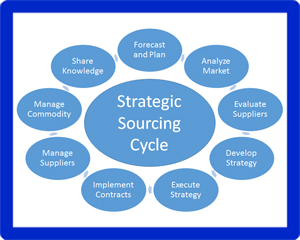
Supplier sourcing strategies are the ways and systems which a company uses to:
●Find possible suppliers.
●Check them out and see if they meet your needs.
●Choose the suppliers that are best for each type of product.
●keep an eye on how well suppliers do over time.
●Lower the risk of relying on suppliers and the supply chain.
A good plan makes sure you don't have to depend on luck, one supplier or unreliable sourcing channels.
Why it's important to find the right suppliers
Businesses often run into problems when they don't have a sourcing strategy:
●Quality that isn't always the same ("good sample, bad bulk").
●Delivery times that are not reliable and missed delivery windows.
●Costs that aren't obvious (like rework, defects, shipping damage, and not following the rules).
●Misleading suppliers (a trading company pretending to be a factory).
●Dependence on one supplier (high risk of disruption).
You can get the following with the right strategies:
●A steady supply and better bargaining power.
●Cost and quality that can be counted on.
●Faster reorders and easier scaling.
●A network of suppliers that can handle busy times and growth.
10 Proven Ways to Find Suppliers (With Examples)
1、Industry Hubs for Cluster-Based Sourcing
Find suppliers in areas known for making your type of product (manufacturing clusters).
Best for: finding things faster, specializing better, and lower prices.
For example, electronics are made in Shenzhen and Dongguan, furniture is made in Foshan, and small goods are made in Yiwu.
Important tip: To set price and quality levels, compare suppliers in the same cluster.
2、 Finding suppliers through multiple channels
Don't put all your eggs in one basket. Use the following to build a pipeline:
●B2B platforms (for finding things).
●exhibitions and trade shows.
●recommendations from logistics and quality control partners.
●groups of people in the same field.
●Use Google or social media to look for factories.
●local agents who can check things out in person.
Best for: finding "strong" factories that don't do a lot of online advertising.
3、 The RFQ Standardization Strategy (Quotes that are the Same)
Make a structured RFQ template so that all suppliers quote in the same way:
●levels of unit price.
●Minimum Order Quantity.
●time to lead.
●putting things in boxes.
●terms of payment.
●requirements for compliance..
Best for: businesses that need to quickly compare a lot of suppliers.
Advantage: makes things clearer and helps people make decisions faster.
4、 Trial Order Strategy (Validation with Little Risk)
Instead of putting a lot of money on the first order:
●make a small test order.
●check the packaging and the inspection.
●check how well shipping works.
●check how quickly they respond and how they act after the sale.
Best for: people who sell things online and new products.
Goal: check execution, not just the price.
5、 A dual sourcing strategy (primary and backup)
For best-sellers, keep two good suppliers:
●Supplier A: main volume.
●Supplier B: backup and price leverage.
Best for: a lot of SKUs and busy times of year.
Benefit: lowers the risk of disruption and boosts negotiation power.
6、 Strategic Partnership Strategy (Supplier Development)
For your main products, make long-term partnerships:
●stable predictions.
●contracts that last a long time.
●working together to improve quality.
●projects to lower costs.
●saved space during the busiest time of year.
Best for: brands that are well-known and have steady demand.
Benefit: more consistency and lower costs in the long run.
7、 Finding OEM/ODM Capabilities
If you need to stand out, look for suppliers who can really do OEM/ODM:
●Help with R&D.
●experience with molds and tools.
●control over materials and processes.
●workflow from design to production.
Best for: private label, brands, and one-of-a-kind items.
Risk: higher minimum order quantities (MOQs) and longer lead times. Must be careful with this.
8、 Sourcing with compliance in mind
For regulated goods or strict markets, give priority to suppliers who can:
●certifications (CE/FCC/RoHS, etc.).
●material safety standards.
●following the rules for labeling and packaging.
● documents for traceability.
Best for: cosmetics, electronics, children's products, and the EU and US markets..
Benefit: lowers the risk of seizures, fines, or marketplace takedowns.
9、 Getting the Total Cost of Ownership (TCO)
Don't just look at the unit price when choosing suppliers; look at the total landed cost as well:
●the cost of rework and the defect rate.
●rate of damage during shipping.
●how well the packaging works (optimizing the carton).
●dependable lead time.
●terms of payment and effect on cash flow.
Best for: businesses that want to grow and make money.
In reality, a supplier with a "higher unit price" can be cheaper overall.
10、 Digital Supplier Database and Scorecard Plan
Make a way to keep track of how well suppliers are doing:
●rate of on-time delivery
●rate of defects/claims
●how quickly they respond
●stable prices
●correctness of documents
●the quality of after-sales service
Best for: teams that buy a lot of different SKUs.
Benefit: you stop making the same mistakes and grow your supply base.
A 7-Steps Practical Guide to Finding the Right Supplier
Step 1: Set Requirements (Spec + Target Cost)
Pay attention to the specifications, quality standards, packaging and target landed cost of your product.
Step 2: Make a long list of suppliers (20 to 50)
Use multi-channel discovery to quickly come up with options.
Step 3: Qualification Filter (Cut it down to 3–5)
Check to see if the factory is real, capable, has a quality control system, has experience exporting and follows the rules.
Step 4: Locking in the samples and specs
Give the samples your approval and put everything in writing (materials, sizes and packaging).
Step 5: Place a trial order and check quality
Run a small order with an inspection to make sure it was done right.
Step 6: Choose a supplier and negotiate.
Talk about the price, terms, defect policy, and lead time commitments.
Step 7: Managing performance and making a backup plan
Give suppliers a score every month or quarter and keep backups of the best-selling items.
Supplier Qualification Checklist (Quick Copy)
●Check Business License and factory address.
●Check type of supplier (factory vs. trader).
●Check proof of production capacity and equipment.
●Check the QC process is confirmed (incoming, in-process, and final).
●Check whether or not the samples met your requirements.
●Check whether or not the ability to provide export documentation has been proven.
●Check whether or not compliance documents are available if needed.
●Check whether or not there is a clear quotation sheet with version control.
●Check whether or not the trial order was inspected and delivered successfully.
and last but not the least.
●Check whether or not the after-sales resolution process is clear.
Things You Shouldn't Do
●Choosing suppliers only because they have the lowest price.
●Not reading the spec sheet (this can cause confusion).
●Making big orders without testing quality control.
●Not checking the packaging (damage hurts profits).
●Depending on one supplier for best-selling items.
● Not keeping an eye on how well suppliers do over time.
Final Thoughts
Supplier sourcing is a process, not just a one-time job. The best businesses have a process that they can follow over and over again: discover, qualify, trial, select, manage, and improve. They also always have a backup plan for important SKUs.